✅ How to Protect Your Account from the Steam Web API Scam (Everyone Should Read!)
Important information about the Steam Web API scam: How to avoid losing your valuable skins!
Today, scammers often use a trick called the Steam Web API scam to steal valuable Steam inventories.
Every day, some of my friends ask for my help because they lost skins this way. To prevent this from happening to you, take a few minutes to read and understand the information below.
This guide explains how this scam works and what you can do to protect yourself.
The method is based on phishing websites that use a fake "Login with Steam" button.
Usually, these websites are advertised through search engines or made to look almost identical to popular trading services. Sometimes scammers pretending to be reputable traders will ask you to check the price of your inventory, join a tournament, verify your account, or perform another action on one of these fake websites.
When you click the fake "Login with Steam" button, you'll be shown a fake Steam login page asking for your Steam username, password and later your Steam Guard code.
The attacker's script uses this information to gain access to your Steam account and create a Steam Web API key on:
https://steamcommunity.com/dev/apikey
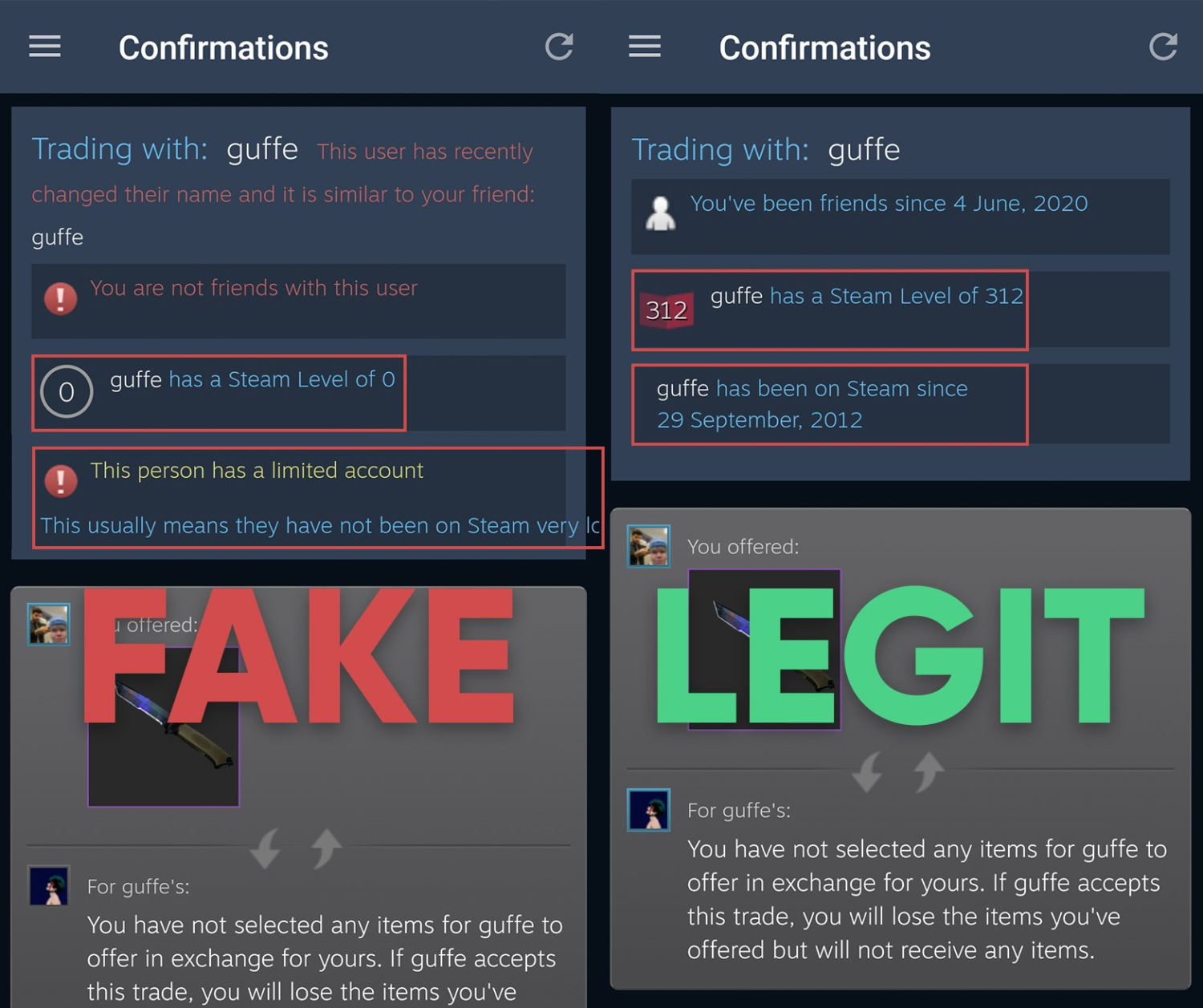
Using this API access, the script monitors your trade offers. If you create a trade containing valuable skins, the original trade is automatically cancelled and replaced with an almost identical trade offer from the scammer's account.
Because the offer looks nearly identical, many users approve it without noticing the account has changed.
To protect your skins, always follow these rules:
1. Don't enter your Steam username or password on unknown websites.
When using "Login with Steam", make sure you're already logged into the official Steam website first.
If a website asks you to manually enter your Steam login information, stop immediately and instead log in directly at:
2. Never log into a website just because someone tells you to.
Even if they claim to be a "reputable trader", have an expensive inventory or many profile comments, that doesn't mean they're trustworthy.
Most scammers pretend to be well-known traders.
3. Avoid using search engines to access websites you already know.
Instead:
type the website address manually;
use bookmarks;
avoid clicking sponsored ("Ad") search results.
Many phishing websites differ from the real one by only a single letter.
4. Always double-check every trade.
Before accepting a trade on your phone:
verify every item you're sending;
verify every item you're receiving;
check the Steam level;
verify you're trading with the correct account.
Never rush because someone says the trade is urgent.
5. Check your Steam Web API key regularly.
Even if you've never been scammed, it's a good habit to periodically visit:
https://steamcommunity.com/dev/apikey
If you see an API key that you didn't create yourself, revoke it immediately.
What should you do if you've already been scammed?
Unfortunately, Steam cannot return your skins after they've been traded away.
You should report the scammer's Steam account. The account may eventually be banned, but completed trades are almost never reversed.
To secure your account, complete these two steps immediately.
First:
Deauthorize all devices.
(You can do this from Account Details → Manage Steam Guard.)
This removes all authorized computers and devices currently connected to your Steam account.
Second:
Go to:
https://steamcommunity.com/dev/apikey
and click "Revoke My Steam Web API Key" if one exists.
For additional security, it's also recommended to change your Steam password.
Trade Safely on Chez.Trading
I created Chez.Trading not only to make item-for-item trading simple, but also to help traders stay safe.
On Chez.Trading:
We use the official Steam OpenID authentication.
We never ask you to enter your Steam username, password or Steam Guard code directly on our website.
We encourage every user to carefully verify every trade before accepting it.
Our goal is to provide a secure and transparent trading experience for everyone.
No website can protect you if you approve a fraudulent trade yourself, but understanding how these scams work dramatically reduces the risk of losing your inventory.
If anyone finds this post helpful, either now or years from now, I'll consider it a success.
Stay safe and happy trading.